A Bowl for Everything: The Most Useful Object in the House
The bowl is the most underestimated object in a home. It holds soup, keys, fruit, and the small evidence of a life being lived. Here is a small argument for the bowl.
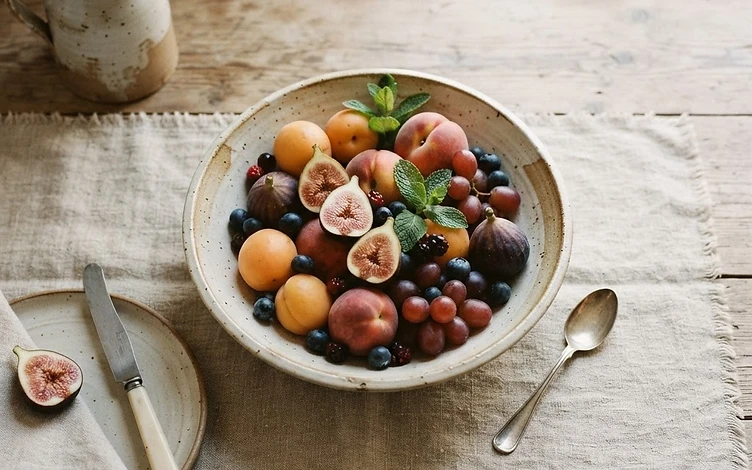
If you had to choose one ceramic object for the rest of your life — one form, one vessel, one thing to eat from, keep in, and live with — the smart choice is not the plate. It is the bowl.
The plate is a specialist. It holds flat things, mostly food, mostly at a table. The bowl is a generalist. It holds soup, rice, fruit, keys, coins, the small evidence of a life being lived. A bowl on a console table by the door is a place for keys. A bowl on a kitchen counter is a place for fruit. A bowl at the table is a meal. The same object, doing three different jobs, in three different rooms, without complaint.
The shape of usefulness
A bowl is useful because of its geometry. The curve is the thing. A flat surface — a plate — lets things slide. A curved surface — a bowl — holds things in. The walls contain. The base grounds. The rim gives you a place to put a spoon. Every part of the form is doing work.
This is why a good bowl is harder to make than it looks. The curve has to be gentle enough to eat from but steep enough to hold liquid. The base has to be wide enough to be stable but narrow enough to cup in the palm. The rim has to be thin enough to be pleasant to the mouth but thick enough not to chip. A bowl is a set of compromises, and the maker's job is to balance them so well that you do not notice any of them.
The bowl you actually use
Most homes have two kinds of bowls. The good ones, which live in a cabinet and come out for guests. And the everyday ones, which live on a shelf and are used for cereal, for snacks, for the meal eaten standing at the counter at midnight.
We would argue for a third kind: the one bowl. The bowl that is good enough for a guest and everyday enough for a Tuesday. The bowl you do not have to think about, because it is always the right one. A stoneware bowl, fired twice, in a neutral glaze, with a base that has been sanded so it does not mark the table. One bowl, in a set of four, that can do every job a bowl is asked to do in a home.
The small life of a bowl
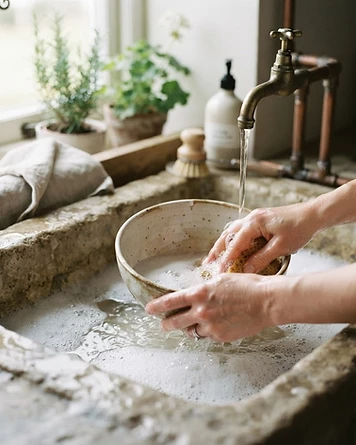
A bowl that is used develops a life. The glaze softens slightly over years of washing. The rim rounds a little from the spoon. Small marks accumulate — not damage, but memory. A bowl you have eaten from for ten years feels different in the hand than a bowl you bought yesterday. It has become yours.
This is the quiet argument for buying bowls that are made to last. Not because they will look the same forever — they will not. But because they will age into something better than new. A cheap bowl ages into a worse version of itself. A well-made bowl ages into a version of itself that you cannot buy.
The point
If you are starting a home, or editing one, start with the bowl. Not the plate, not the cup — the bowl. It is the object that will do the most work, in the most rooms, for the longest time. Get four that you actually like. Use them for everything. Let them age. A good bowl, it turns out, is the most useful object in the house — and one of the only ones that gets better the more you use it.
— The HomeofTan Editorial