
How to Style a Dining Table (Without Making It Look Done)
A styled table should look like someone lives here, not like someone is selling you something. Here is how to get there in five moves.
There is a difference between a styled table and a set table. A set table is correct — knife on the right, fork on the left, water glass above the knife. A styled table has a point of view. It looks like someone made a series of small, deliberate choices, and then relaxed enough to let a few things be out of place.
The mistake most people make when they style a table is that they try too hard. Every napkin is folded. Every plate is centred. Every glass is aligned to the millimetre. The result looks like a showroom, not a home. People are afraid to sit down because they might ruin it.
Here is how to style a table that looks lived-in — that looks like it is waiting for someone to arrive, not waiting to be photographed.
1. Start with the cloth, not the plates
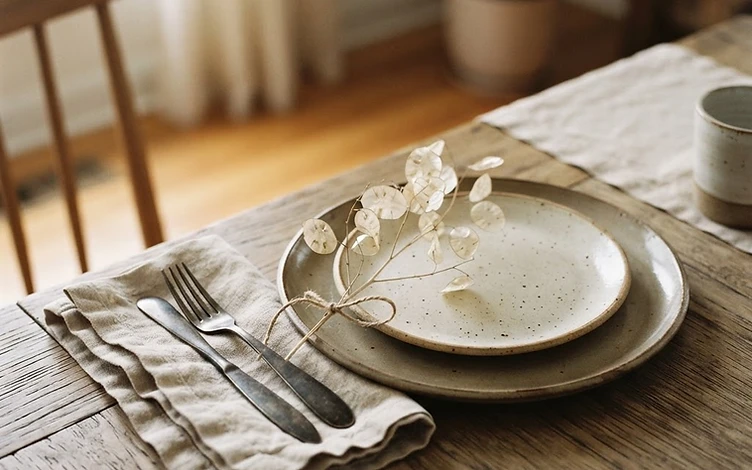
The surface underneath everything sets the tone. A plain linen runner in a natural colour does more work than any centrepiece. It softens the hard edge of the table, it catches crumbs, and it tells the eye: this is a table that is used, not a table that is displayed.
Avoid printed tablecloths. They compete with everything you put on top of them. A solid, textured neutral — oat, clay, stone — lets the plates and the food do the talking.
2. Mix, don't match
The most boring table in the world is a table where every plate is identical. The most interesting table is a table where every plate is different but related — same glaze family, different form, or same form, different glaze.
You do not need a full set of anything. You need a collection of things that clearly like each other. Three stoneware plates in cream, two in a warmer clay, one bowl that doesn't match any of them but belongs anyway. That is a table with a personality.
3. Leave negative space
A styled table does not need to be full. In fact, the single most powerful styling move is restraint. Leave a stretch of bare table between the plates and the centrepiece. Let the wood or the linen show through.
Negative space is what makes a table look intentional rather than cluttered. It is the visual equivalent of a pause in a conversation — it lets everything else make sense.
4. Use something that was not made for the table
This is the move that separates a styled table from a set one. A small stack of books. A single stone. A sprig of something from the garden. A candle that has already been lit once and has a memory.
These objects break the pattern. They say: a person did this, not a machine. One non-table object, placed with confidence, changes the whole reading of the table.
5. Let one thing be wrong
A napkin that isn't folded. A glass that is slightly off-centre. A plate that is rotated a few degrees. Perfection reads as artificial. A single, small imperfection reads as human.
The goal is not mess. The goal is ease. A table that has been styled and then slightly disturbed looks like it is ready for life — which is the only thing a table is ever actually for.
The whole point
A styled table is not a performance. It is an invitation. It says: sit here, stay a while, this was made for you. If your table says that, it is done — even if, especially if, it doesn't look done.
— The HomeofTan Editorial